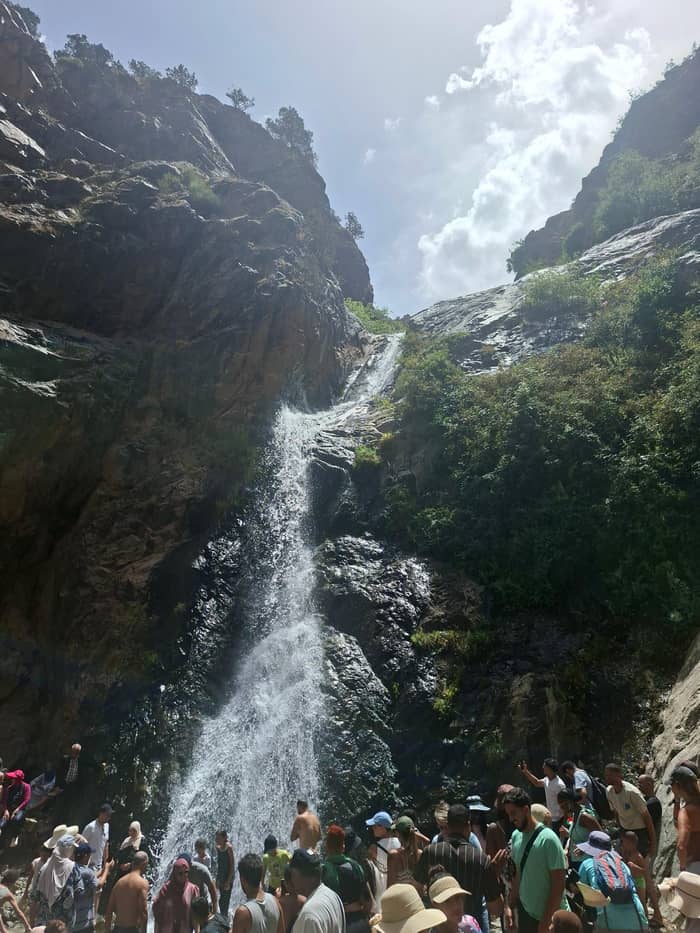
Craft focus
Berber house and argan
Workshop, cooperative
- Village stopsBerber house and argan cooperative
- Length7 to 7.5 hours
- Pricefrom $11
Spot your stop
Look at 25 stops
Tap a route first, then a pin or stop, for its note and Google Maps.
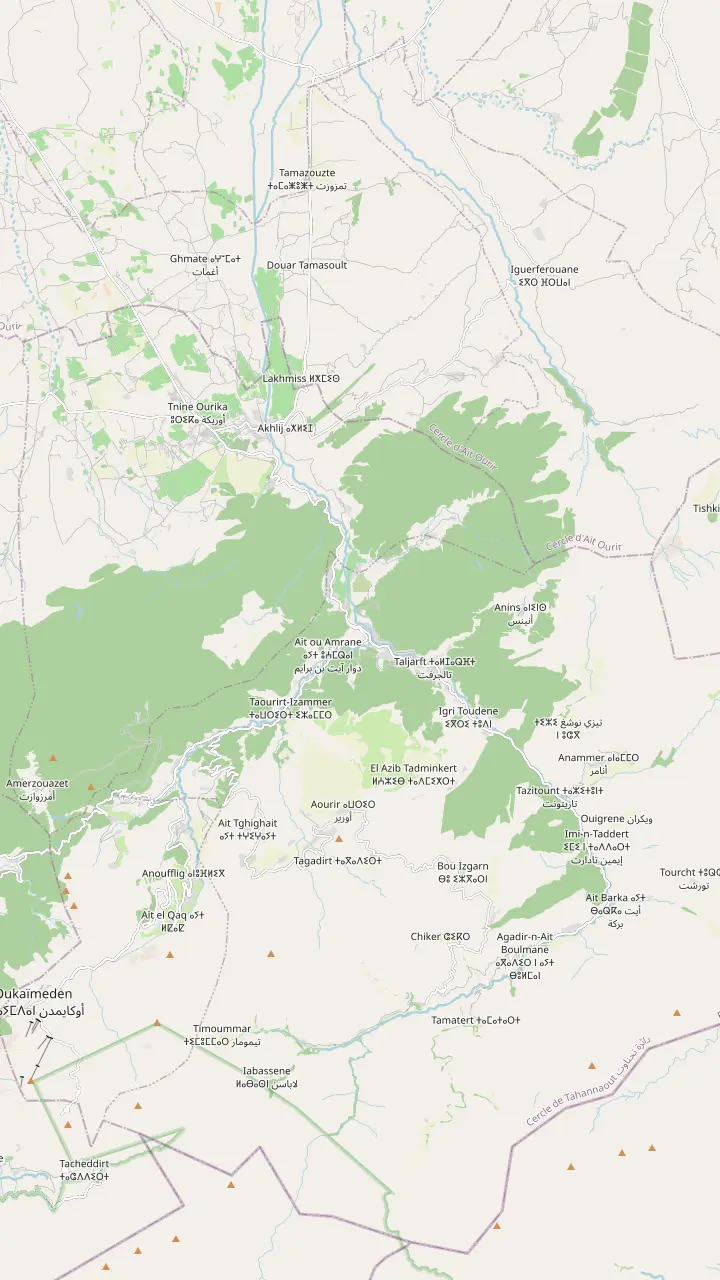
ANIMA is a garden of art and nature on 3 hectares in the valley, with a free shuttle from Marrakech.
Google MapsTnine Ourika has a weekly souk, a saffron museum open all year and the 30 minute village stop of the site tour.
Google MapsKasbah Bab Ourika has 42 rooms on a hilltop above the river, the fields and the olive groves.
Google MapsSetti Fatma is the end of the valley road: the site tour gives it 1.5 hours with an optional guided hike, and the council describes a walk of 2 hours to the waterfalls.
Google Maps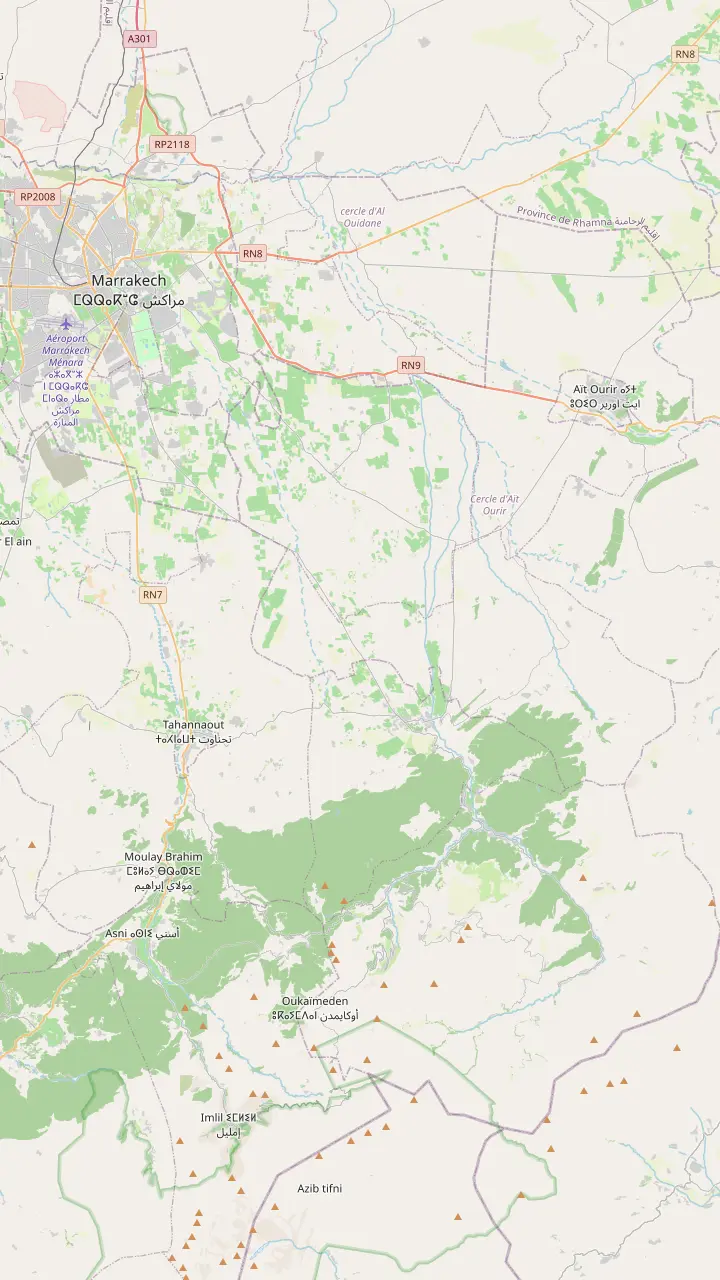
Marrakech is the base for the valley, which the tourist office lists as a day trip of about 1 hour.
Google MapsANIMA is a garden of art and nature on 3 hectares in the valley, with a free shuttle from Marrakech.
Google MapsTnine Ourika has a weekly souk, a saffron museum open all year and the 30 minute village stop of the site tour.
Google MapsKasbah Bab Ourika has 42 rooms on a hilltop above the river, the fields and the olive groves.
Google MapsSetti Fatma is the end of the valley road: the site tour gives it 1.5 hours with an optional guided hike, and the council describes a walk of 2 hours to the waterfalls.
Google MapsOukaimeden is the ski resort of the High Atlas, 74 km from Marrakech at 3,200 m, with skiing from December to March.
Google Maps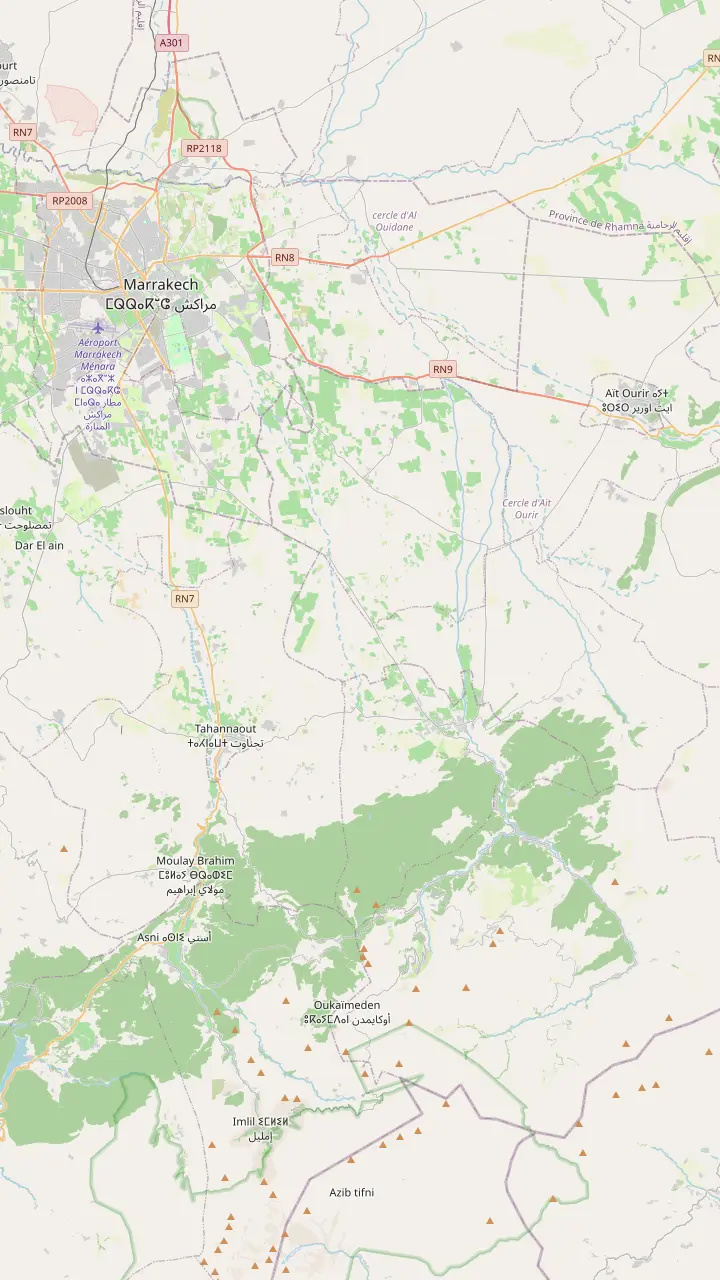
Kasbah Bab Ourika places itself 45 minutes from the airport, and the ecolodge Le Douar Berbere says 45 minutes from Marrakech.
Google MapsMarrakech is the base for the valley, which the tourist office lists as a day trip of about 1 hour.
Google MapsANIMA is a garden of art and nature on 3 hectares in the valley, with a free shuttle from Marrakech.
Google MapsTnine Ourika has a weekly souk, a saffron museum open all year and the 30 minute village stop of the site tour.
Google MapsKasbah Bab Ourika has 42 rooms on a hilltop above the river, the fields and the olive groves.
Google MapsSetti Fatma is the end of the valley road: the site tour gives it 1.5 hours with an optional guided hike, and the council describes a walk of 2 hours to the waterfalls.
Google Maps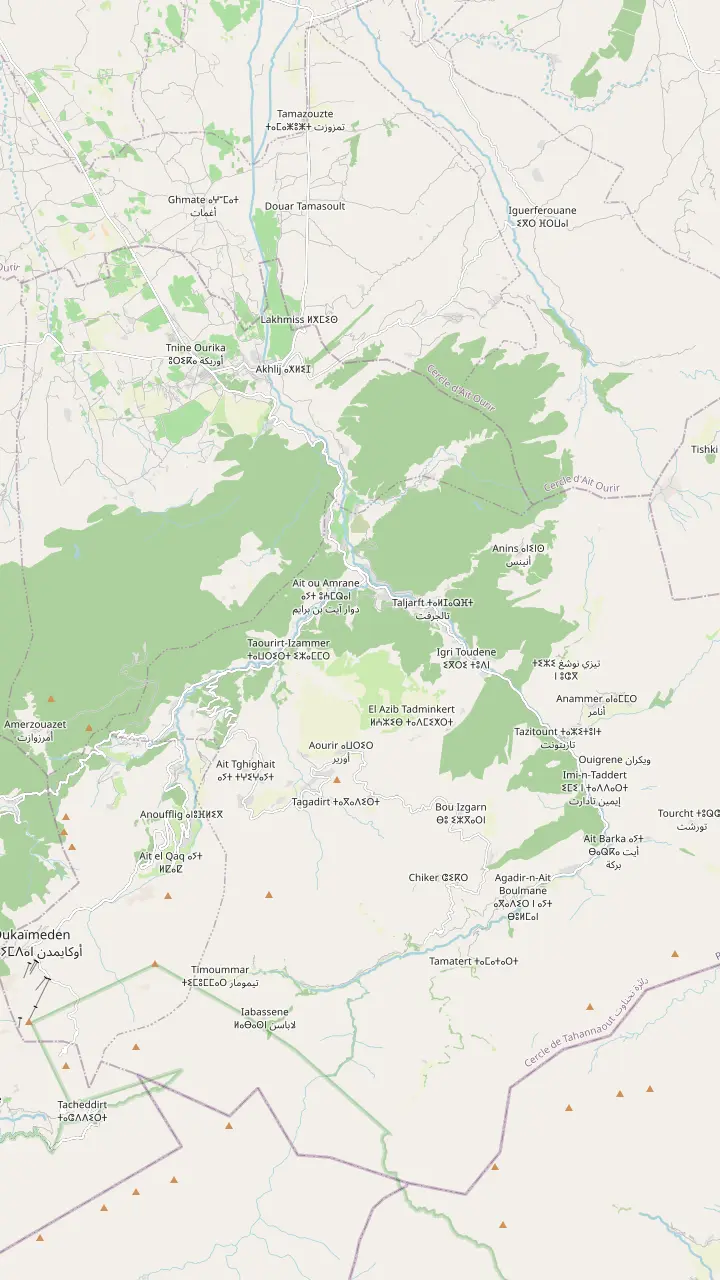
Tnine Ourika has a weekly souk, a saffron museum open all year and the 30 minute village stop of the site tour.
Google MapsSetti Fatma is the end of the valley road: the site tour gives it 1.5 hours with an optional guided hike, and the council describes a walk of 2 hours to the waterfalls.
Google MapsOukaimeden is the ski resort of the High Atlas, 74 km from Marrakech at 3,200 m, with skiing from December to March.
Google Maps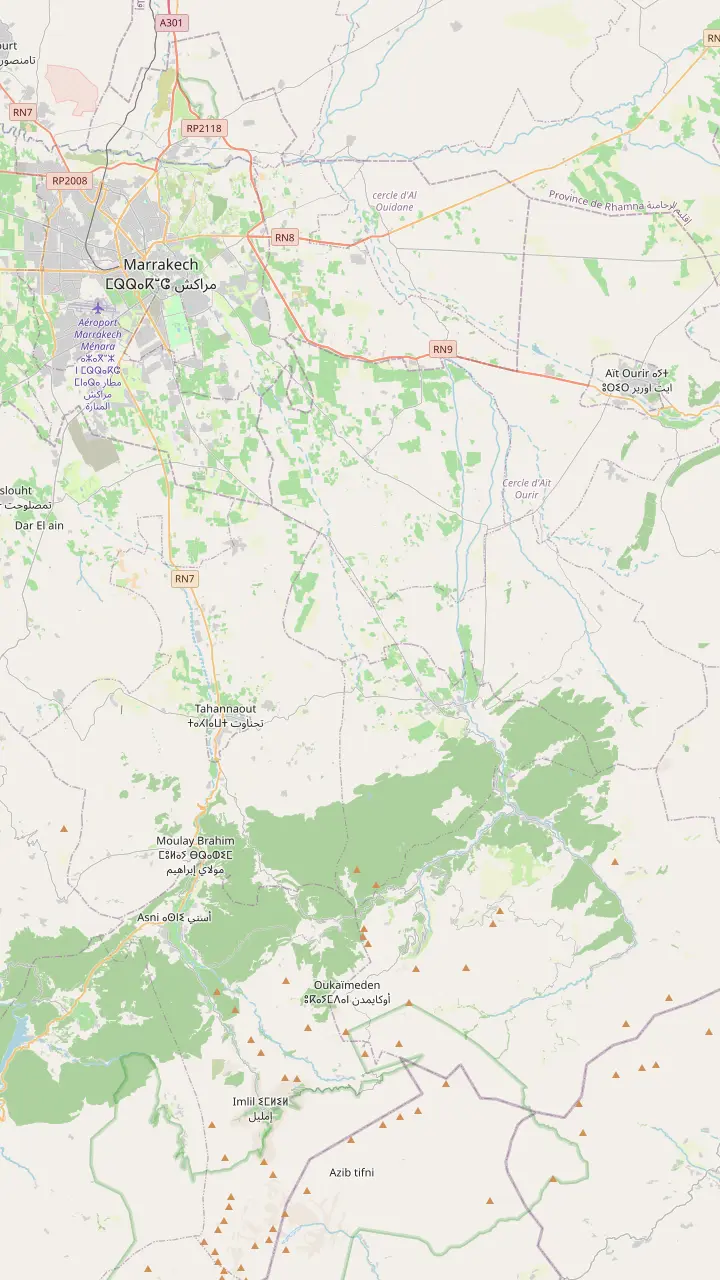
Kasbah Bab Ourika places itself 45 minutes from the airport, and the ecolodge Le Douar Berbere says 45 minutes from Marrakech.
Google MapsANIMA is a garden of art and nature on 3 hectares in the valley, with a free shuttle from Marrakech.
Google MapsTnine Ourika has a weekly souk, a saffron museum open all year and the 30 minute village stop of the site tour.
Google MapsKasbah Bab Ourika has 42 rooms on a hilltop above the river, the fields and the olive groves.
Google MapsSetti Fatma is the end of the valley road: the site tour gives it 1.5 hours with an optional guided hike, and the council describes a walk of 2 hours to the waterfalls.
Google MapsOukaimeden is the ski resort of the High Atlas, 74 km from Marrakech at 3,200 m, with skiing from December to March.
Google MapsMaps © OpenStreetMap contributors
Who lives along the river, what a 30 minute village stop really shows, how to tell a working cooperative from a shop, and the manners that make a visit welcome.
Editorial team, ourikatour.com · Updated November 23, 2026 · Allow 7 min
Main facts
Berber is the name most visitors know and Amazigh is the name many Berber people use for themselves. The language is Tamazight, and the 2011 constitution of Morocco makes it an official language of the State, alongside Arabic.1 The same text describes the national identity as forged by the convergence of Arab-Islamist, Berber and Saharan-Hassanic components.6 In the Ourika valley that is not an abstraction: it is the language of the houses, the fields and the weekly market.
The regional tourism council describes the setting plainly: villages built in the Berber tradition are scattered across the landscape and show how local people live.2 The climb starts on the flat Haouz plain, among olive groves and orchards, before the foothills begin.7 The villages are not a museum behind glass. They are working places with terraces, schools, shops and a pace of their own, and a visitor is a guest in them for an hour or two.
A few words help. A douar is a small village or hamlet, and you will see the word in the names of lodgings. A kasbah is a fortified house, often of earth, and a souk is a market. A cooperative is a members' organisation, usually of women, that sells what its members make. The glossary table below puts these words next to what you will see on a day trip, so the guide's explanations land more easily.
Words you will hear
| Word | What it means | Where you meet it |
|---|---|---|
| Amazigh | The people many call Berber | In every village of the valley |
| Tamazight | Their language, official since the 2011 constitution1 | In houses, markets and road signs |
| Douar | A small village or hamlet | In lodging names and addresses8 |
| Kasbah | A fortified house, often of earth | On hilltops above the river9 |
| Souk | A market | Weekly at Tnine Ourika4 |
| Cooperative | A members' organisation that sells what members make | At argan, oil and carpet stops10,11 |
The meanings are everyday definitions; the sources named in the right-hand cells show where each word appears in the valley.1,9
The listings are specific about time. The site tour allots Tnin Ourika 30 minutes, covering a break, photographs, a walk-through, a guide's tour and shopping. Another day trip stops at an Ourika cooperative for 40 minutes and at a Berber miller house for 35 minutes with tea. Thirty minutes is short. It is enough for a walk along the main street, a look at a workshop and a purchase, and not enough for a conversation unless you start one at once.
Some itineraries add a house visit. One listing names a Berber house at Tamzenndirt with a workshop, a women's cooperative of argan oil, and Tnin Ourika, all before the hike at Setti Fadma. Another names the Amal Ourika Cooperative with shopping. The stops differ from operator to operator, so read the itinerary before you book. A stop with a workshop is worth more than a stop that is only a shop, and the itinerary shows which one you are getting.
Use the short time well. Ask the guide before you arrive what the village is known for, what you can watch, and whether there is a tea on offer. Keep your phone away at first and look. A listing for the valley notes that cash is useful for souvenirs because credit cards are rarely accepted, so bring small notes. Prices in a cooperative shop are usually not for bargaining the way they are in a souk, and a polite question about that is better than a negotiation.
Time at the stops
Stop lengths from the listings: Tnin Ourika 30 minutes, a miller house 35, a cooperative 40, the river lunch 50 and Setti Fadma 80.
A souk is where a village does its week. Tnine Ourika has a weekly market that attracts shoppers from the valley's hamlets and nearby villages.4 The tourism council also notes bright markets that show off local crafts across the valley.3 Ask your operator which day the market runs and whether the tour passes it. A day trip that happens to stop on market day shows a very different Tnine from a day trip that stops on a quiet afternoon.
The foothills hold other markets worth knowing. The council says Tahanaout is known for a weekly souk that draws local people to buy and sell,14 and says the same of Asni.15 Neither is on the standard valley itinerary, but both lie on the roads out of Marrakech and appear on longer Atlas days. If you have a spare morning, a market in the foothills is one of the easiest ways to see what the valley's villages buy and sell.
A cooking class can turn the market into a lesson. The council lists a 5-hour experience that pairs a visit to the Tnine Ourika souk with a tagine class at an inn in the valley.16 It is not the standard day trip and it costs more time, but it shows a household's food from shopping to table. For a visitor who wants more than a photo stop, it is a good alternative to a second hike, and the family that hosts you will usually tell you more about the valley than any sign does.
Pick your stops
Find the thing you most want from the villages and read across to the stop that delivers it.
If I want to watch argan oil being worked
Ask for the women's cooperative
One listing names a women's argan cooperative stop.
If I want tea in a house
A miller house stop
A listing gives a Berber miller house 35 minutes with tea.
If I want a market
Check the market day
Tnine Ourika holds a weekly souk.4
If I want to see carpets made
A carpet cooperative
The council lists a carpet weaving cooperative with workshops.11
If I want to see saffron
Late October to November
The crocuses bloom from October 21 through November 30.12
If I want a quiet village moment
Allow time after the stop
A stop of 30 minutes is short, so ask for more.
Three village days
Craft focus
Workshop, cooperative
House visit
Tea in a house
Site tour
Tnin Ourika
The argan oil cooperative in the Ourika valley is the stop most tours advertise. UNESCO describes argan as an endemic tree of the Arganeraie Biosphere Reserve in south-west Morocco, with oil extracted by rural women using traditional methods.5 The tourist office says argan trees grow in one area near the Atlantic coast.28 So ask the cooperative in the Atlas what happens in the valley and what arrives from the coast, and you will learn more than any sign will say.
The know-how is worth the question. UNESCO says it passes from mothers to daughters through the argan women, who start teaching young,29 and that the oil is a wedding present and a staple of festive cooking.13 The council's itinerary names a valley cooperative that specializes in oils from argan, almond and sesame, and in floral waters and ghassoul.10 A good stop lets you watch part of the work, smell the products and ask who benefits when you buy.
The valley offers other crafts. The council lists a Berber carpet cooperative that runs workshops on the meaning of the patterns.11 It also lists a Saffron Garden at Tnine Ourika whose museum stays open all year,20 and the crocuses bloom from October 21 through November 30.12 To tell a working cooperative from a plain shop, ask who owns it, whether the workers are members, and whether you can see the work before you see the shelves.
Compare the days
Count your party, then see what each of the three village days costs.
3 options compared
Count your party, then see what each of the three village days costs.
≈
View≈
View≈
ViewStarting prices on GetYourGuide, exchanged at the ECB reference rate. The booking page gives the exact price.
A village stop
Arrival
The site tour gives Tnin Ourika 30 minutes.
The cooperative
One listing stops at an Ourika cooperative for 40 minutes.
The workshop
Another names a Berber house at Tamzenndirt with a workshop and a women's argan cooperative.
The tea
A miller house stop of 35 minutes includes tea.
The shop
Shopping is part of the stop, and cash is useful.
Back on the road
The route continues to the Ourika River for lunch.
The Berber ecomuseum of the Ourika valley is a small museum of village life that many visitors hear about before they arrive, usually as a recommendation from a friend or a guidebook. The listing records used for this site show stops at cooperatives, a Berber house and a miller's house, and none of them names the ecomuseum as a stop. If it matters to you, ask your operator whether it is on the route or whether it can be added.
Opening times in small village museums change with the season, the family and the day. No official page is cited for this one, so do not count on a fixed hour. Ask the museum directly or ask your guide to phone ahead. A short visit with a person who knows the objects is worth more than a long visit to a locked door, and a guide who has a relationship with the place can often get you in at an odd hour.
Visitors should also remember the earthquake of 8 September 2023, which the US Geological Survey records as magnitude 6.8 in Al Haouz,30,31 and which the UK advice says killed almost 3,000 people in Morocco.32 Repairs take time in any mountain region after an event of that size. If a museum or a house is closed, treat that as a fact of recovery and not as a lack of welcome, and ask what you can do to help, such as buying directly from the people who work there.
Video
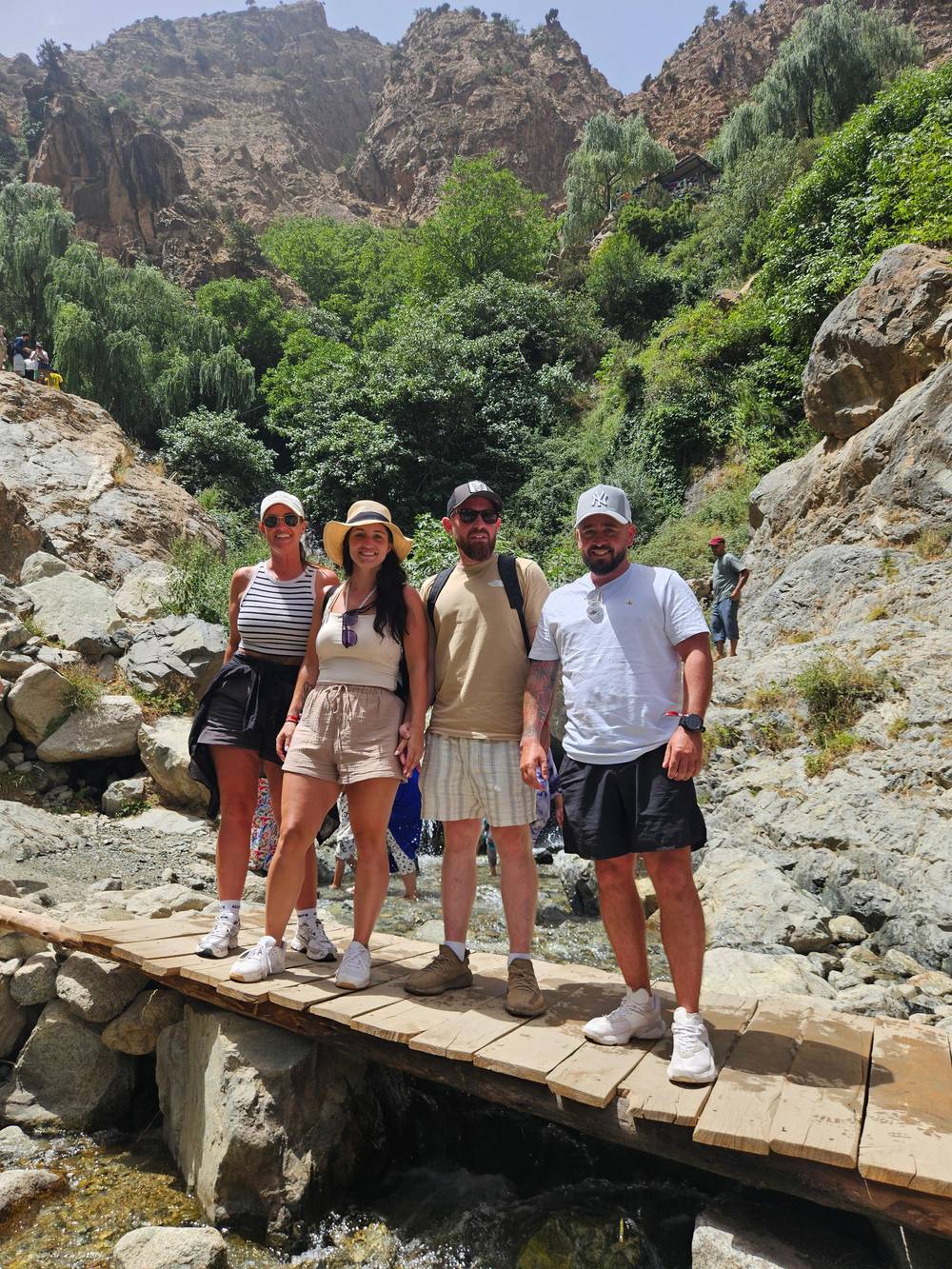
Away with the Steiners on YouTube · The video waits until you tap play to load.
Argan oil is given as a wedding gift and is used extensively in the preparation of festive dishes.
Before the stop
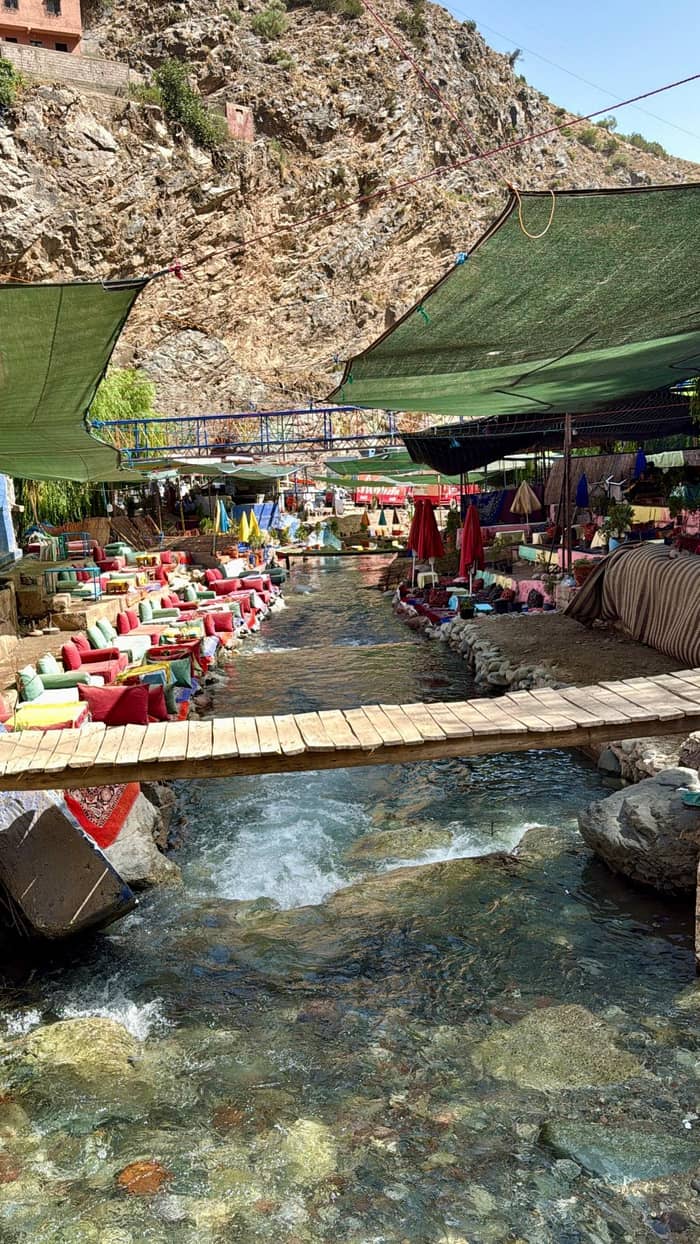
A mint tea in a house is the classic gesture of welcome. The council's itinerary closes with a stroll beside the Ourika river and a mint tea,33 and a day trip listing includes tea at a Berber miller house for 35 minutes. Accept with thanks, drink slowly, and do not rush to leave. The guide will tell you the custom for the second glass, and a small purchase afterwards says thanks politely.
Dress and conduct matter in villages. The UK government asks visitors to respect local customs, laws and religions.34 A listing for a nearby Imlil day says modest clothing is appreciated in villages. Get permission before photographing anyone, children above all.27 If a family declines a photo, accept it with a smile. A photograph of a doorway or a field is almost always fine, and a good conversation with the guide as translator is worth more than a picture.
Try to leave something behind. Buy a product at a cooperative rather than at a roadside stall, eat lunch in a village restaurant, and tip the guide in cash. One listing says cards are rarely accepted for souvenirs, so keep small notes for that. If you are visiting in Ramadan, the advice says dress below local standards risks giving more offence,35 so a scarf and long sleeves are a good idea. A small effort in these things makes the visit welcome on both sides.
FAQ
The council's road trip runs through Tnine Ourika, Oualmas and Sti Fadma.22
The site tour gives Tnin Ourika 30 minutes, and another listing gives a cooperative 40 minutes and a miller house 35 minutes.
No official opening time is cited here, so ask the museum or your guide to check ahead of the day you plan to go.
The 2011 constitution makes Tamazight an official language of Morocco.1
The UK advice is to get permission before photographing anyone, children above all.27
A listing for a nearby Imlil day says modest clothing is appreciated in villages.
Sources
Next read
Planning a day in the Ourika valley? Ask a real person here.